Join 21K other subscribers

Tag: Great By Choice

  • “Luck” in the context of business

    Luck in the context of business meets the following three tests

    1) Some significant aspect of the event occurs largely or entirely independent of the actionsof the key actors in the enterprise

    2) The event has a potentially significant consequence

    3) The event has some element of unpredictability

    Adopted from Jim Collins’s Great By Choice
  • THE 20 MILE MARCH & its SEVEN ASPECTS.

    All top performers are guided by a good & steady 20 Mile March approach has the following seven key aspects :

    1) Clear performance markers

    2) Self imposed constraints

    3) Specific to an enterprise

    4) Largely within company’s control to achieve

    5) Needs a proper timeframe to achieve

    6) Imposed by the company upon itself

    7) Achieved with high consistency else this is not sustainable

    Adopted from Jim Collins’s book titled “Great By Choice”

  • Adhering to a “20 Mile March” strategy needs character

    This is a specific performance marker that 10X companies adopt consistently over a period of time

    Adhering to this metric needs true character and requires two distinct types of discomfort:

    1) Showing self restraint and holding back in good times without being greedy so that

    2) High performance is delivered during difficult times

    Think of SWA and profit delivered immediately post 9/11

    Adopted from Jim Collins’s book Great By Choice

  • Doing a “20 Mile March” consistently over time

    The “20 Mile March” is a steady performance marker adopted by high performing organizations that help them survive the test of time

    This steady march requires hitting specified performance markers consistently over a period of time.

    This kind of a strategy needs exercise of self restraint during good times to not be greedy and abide by the set targets

    Adopted from Jim Collins’s book titled “Great By Choice” , this is one of the unique defining characteristics that separates 10X companies from competitors

  • How “Productive Paranoia” helps keep high performing organizations afloat?

    The three main dimensions of “Productive Paranoia” exhibited by high performing or 10X companies , as mentioned by Jim Collins in “Great By Choice” are as follows:

    1. Build cash reserves and buffers is like having sufficient oxygen cannisters to help climb Mount Everest.It is the reserve that bails a company out of crisis situations and helps to proceed with its 20 Mile March even during tough times
    2. Bound all possible risks and safeguarding against them with religious planning.The risks are a) Death Line Risks b) Asymmetric Risks c) Uncontrollable risks and d) Time bound risks
    3. Zooming out and in and being continuously vigilant to sense change conditions and threats in the environment.

    Thus “Productive Paranoia” when exercised with the right intention can help to keep a company afloat and make profit and growth during difficult times.

    The best example that comes to mind is how SouthWest Airlines made profits without any job cuts post 9/11 by demonstrating this quality to the best extent possible.

  • Why any business must understand these three risks?

    Any business big or small must understand the following three risks and adopt necessary means to mitigate the same:

    1. Death Line Risk – This if not properly mitigated can kill or severely damage an enterprise
    2. Asymmetric Risk – The downside of such risks dwarfs the upside.
    3. Uncontrollable Risk – This cannot be controlled or managed and when occurs needs to be acted upon.

    It has been observed that all high performing or 10X companies have demonstrated better ability in mitigating these risks than their competitors.This is what has made companies like SouthWest Airlines , Apple to where they are today

  • Why is “Productive Paranoia” needed for high performance?

    High performers referred to as 10X performers in Jim Collins’s book titled “Great By Choice” , maintain hypervigilance ,staying highly tuned to threats and changes in environment even when everything is going well.

    These high performers use “Productive Paranoia” to turn their fear and worry into action , preparing and developing contingency plans , building buffers and maintaining high margins of safety.

    Adopted from Jim Collins’s book titled “Great By Choice”

  • Why is “Empirical Creativity” needed for high performance?

    This skill relates to relying on direct observation , practical experimentation and direct engagement with direct evidence.This helps high performers make bold moves from a sound empirical base.

    Thus when faced with uncertainty , high performers or 10X performers do not look up to other people or peers for direction they primarily look up to empirical evidence.

    Adopted from Jim Collins’s book titled “Great By Choice”

  • Fanatic Discipline for high performance

    Fanatic Discipline for high performance

    Why is Fanatic Discipline needed for High Performance?

    In his book Great by Choice Jim Collins illuminates us on the need for leaders to exhibit fanatic discipline for high performance of their teams.

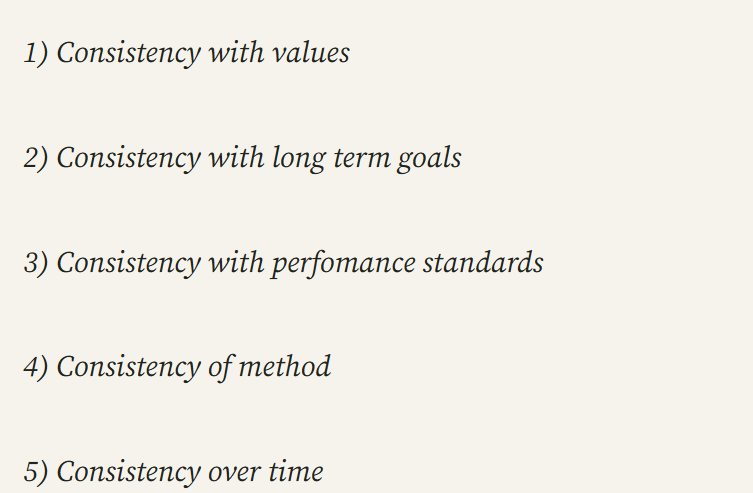
    Such Discipline helps in displaying extreme consistency of action in terms of values , goals , performance standards & methods.

    With a sense of “Fanatic Discipline” , high performers are utterly relentless , unbending in their focus on their quests.

    The following snapshot mentions the 5 elements which are the key ingredients of Fanatic Discipline.

    Fanatic Discipline for High Performance

    For another such wonderful insight from the same book, please read below:

    https://viewpointsunplugged.com/10x-organizations-and-their-fanatic-discipline/

    To know more about the author Jim Collins and his work please read the link:

    https://en.wikipedia.org/wiki/James_C._Collins

  • Guiding principles adopted by high performing companies

    SMaC stands for Specific , Methodical and Consistent operating practices adopted by 10X companies as a recipe for long term success

    Though this is a checklist , depending on the changing environment it needs to be dynamic without altering the basic essence

    10X compaies use “empirical creativity” to develop the checklist , “fanatic discipline” to stick to it and “productive paranoia” to sense necessary changes

    Adopted from Jim Collins’s book titled “Great By Choice”